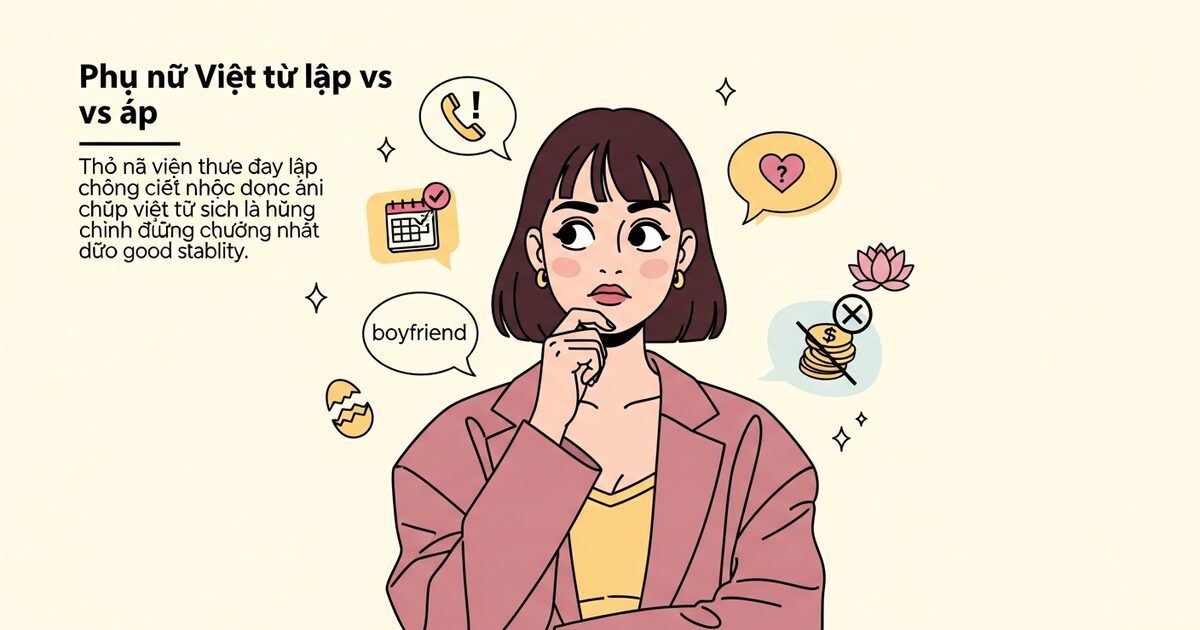
Vietnamese Women’s Independence vs Family Pressure: What’s the Line to Avoid Pain on Both Sides?
Published 2026-05-17

✨ Quiz
Best Friend Type
3 PM on a Tuesday, and I'm in a crucial project meeting. Mom calls. I pick up: "Hey, Aunt Hai is asking if you have a boyfriend yet, and I don’t know how to respond." I mute my mic, sigh, and type in the group chat, "BRB in 5."
I’m financially independent. I rent a place in the big city. I make 30 million. Yet, I’m still seen as "not stable" because I don’t have a husband. This isn’t just my story — it’s the default mode for Vietnamese Gen Z women aged 25-30.
The New Independence Nobody Teaches
My mom taught me that "you need a husband to be safe." School taught me "you need good grades to get a good job." No one teaches you how to handle when both of those expectations pile up on you.
When you start making money, your family thinks you're "set." They don’t see you dealing with a flat tire at 11 PM, going to the doctor alone when you’re burning up with a fever, or meeting deadlines when your boss is mad. Financial independence doesn’t equal emotional independence.
And families define "taking care of you" as asking when you’re getting married. Every week it's "when are you getting married?" or "when are we getting grandkids?" — they think they’re showing concern. I feel like I’m under surveillance.
The problem isn’t that they’re wrong. The issue is that the reference frames of two generations are just too far apart.
Boundaries: Not a Weapon, But a Door
I once read this on Threads: "boundaries aren’t walls — they’re doors with locks, and you decide when to open them." Sounds cheesy, but it’s true.
For families, Gen Z boundaries don’t mean cutting ties. It means: you have the right to not respond to a text right away; you can skip going home every weekend; you can choose not to update them on your love life.
One of my friends in Hanoi follows the rule "visit home once a month, call mom once a week for 30 minutes, no more." At first, her mom was mad. After three months, their relationship improved — because there were no deadlines or expectations, every call felt real.
On the flip side, another friend tried to please everyone: going home every week, calling her mom daily, dating based on family suggestions. She burned out after six months. Now, nobody’s happy — not even her mom.
What Helps Boundaries Hold Strong?
Consistency. If you say "I’m not discussing marriage anymore" but then argue about it the next week — your family will think you’re wavering and will push harder.
Keep your replies short, no explanations: "I’m good, thanks mom." Repeat 100 times. No need to justify your lifestyle, no need for philosophical debates.
And the most important: showing, not telling. When your family sees you thriving long-term — healthy, financially stable, good vibes — they’ll chill out on their own. No need to convince them with words.
When to Let Go a Little?
Boundaries aren’t absolute. Sometimes, you gotta be flexible.
Last year, my mom got sick. I dropped everything and went home for two weeks. I didn’t argue about "you should be working." Because that was one of those moments when family truly needed me.
Healthy boundaries mean: you’re there when they need you, but you’re not there all the time because of their expectations. You love your family, but you don’t live their life.
When was the last time you rejected a family expectation without adding five minutes of explanation — and what did you feel after?