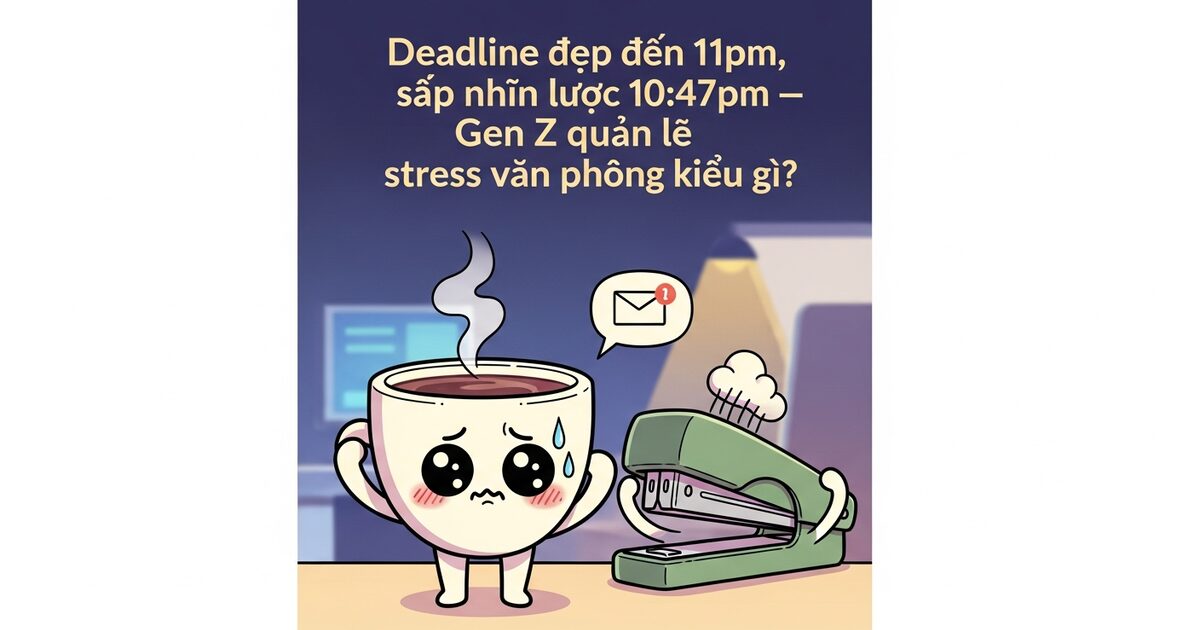
Deadline Hits at 11pm, Boss Texts at 10:47pm — How Gen Z Manages Office Stress?
Published 2026-05-17

✨ Quiz
Aura 2026
10:47 PM on a Thursday. I just washed my face and was about to hit the hay. Slack ping. Boss texts: "Hey, the deck for tomorrow's 9 AM meeting, please finish the V2 version in 8 seconds. Thanks." I stared at the message for a minute. Didn’t reply. Opened Netflix instead. Gonna wake up at 8 AM to get it done.
That’s a small decision — but it’s a sign that Gen Z handles stress differently than the generations before. Millennials would be opening their laptops at 11 PM. Boomers would be up until 2 AM. Gen Z? They’ll reply in the morning and are lowkey ready to face the consequences.
How Gen Z Stress Differs from Millennial Stress
Millennials grew up during the 2008 recession and saw hustle culture go viral. "Be grateful you have a job" is the default mindset. Boss texts at 11 PM → reply immediately, no arguing, no complaining (just venting to their friends in the same generation).
Gen Z watched Millennials burn out. They saw their 32-year-old cousin have a nervous breakdown from work, and their 35-year-old uncle quit the corporate grind to freelance due to depression. They took notes: "I’m not doing that."
As a result, Gen Z has a mindset called "quiet quitting" — not quitting the job, but just doing their job and nothing more. No replying to emails after hours. No taking on extra tasks for free. No attending unpaid happy hours.
But don’t get it twisted — Gen Z is stressed, just not in the same way. Their stress is heavier — it’s just more internalized, not shown outwardly, and they don’t vent to their bosses.
The Real Stress of Gen Z
On the surface, Gen Z looks chill: "Who cares, Gen Z isn’t worried about high salaries." That’s a defense mechanism.
Behind that facade is: worrying about never being able to buy a home, comparing themselves to their relatives, feeling stuck at a junior level for 3 years, and fearing layoffs because of AI taking over jobs. And there’s no outlet for it — because if they show their stress, people say, "Shut up, you’re still complaining about being lucky," and keeping it inside leads to depression.
Plus, Gen Z is the first generation to fully experience hybrid work. The lines between work and home are blurred. WhatsApp for work + email for work + Slack for work + phone for work — there’s never a real break.
I remember a week I went on vacation to the mountains with my family. On the hiking trail, I was still checking Slack. That’s when I realized: if I don’t set my own rules, I’ll get eaten alive.
How to Practice "Boundaries" Without Getting Fired
Boundaries aren’t about saying no to everything. It’s about choosing what matters and saying no to what doesn’t.
Defining clear working hours is one of the most important ways. Messages after 7 PM? Reply the next morning, no apologies. A good boss will pick up on that pattern and won’t expect replies at midnight.
Another effective way is to say "I’ll get back to you" instead of just "yes." When you get an urgent task, don’t commit right away. Respond with "Let me check the timeline and I’ll update you." Take a couple of hours to decide. It reduces decision-making under pressure.
Taking a mental sick day also works. Give yourself 1-2 days off per quarter for burnout (just call in sick, no explanations needed). This is maintenance, not laziness.
Most importantly: separate your identity from your job. You’re not just a designer/marketer/engineer. You’re a person doing that job to live. When you start to hate your job, that’s a sign you need to change it, not that you need to try harder.
When Should You Actually Quit?
Gen Z switches jobs faster than previous generations — on average every 1.5-2 years. It’s not because they’re lazy, but because they’ve seen that the biggest salary jumps happen when you switch companies, not just when you get promoted internally.
But quitting isn’t a fix-all either. If you’re burning out because of your own work patterns (overcommitting, being a perfectionist, lacking boundaries), switching jobs will just repeat the cycle.
Quit when: your salary has been stagnant for 2 years, your boss is toxic, or the company isn’t investing in you. Stay when: your salary is decent, your boss respects your boundaries, and you’re learning. It’s that simple.
When was the last time you refused to reply to a work message after hours — and did drama unfold the next morning?