The ChatGPT Dependency Test: Are You Outsourcing Your Gut?
Published 2026-05-24
✨ Quiz
16 Personality Types
I knew my AI use had gotten weird when I asked ChatGPT to help me phrase a text that said, basically, “Sure, Tuesday works.” Not a breakup text. Not a legal email. Tuesday. That was the moment I closed the tab and stared at the wall.
The radar brief cited a r/DecidingToBeBetter post called “I want to stop using ChatGPT,” with 106 score and 38 comments, plus a Google Trends AR “AI adoption” row above 2,000. The topic is not anti-AI panic. It is self-trust.
ChatGPT dependency is not always about hours used. It is about the moment before use. Are you asking for help because the task benefits from a second brain, or because you no longer trust your first draft of being a person? Sharp difference.
Why this specific signal hit
The reassurance looper asks the same question in five forms. “Was that rude?” “Will they be mad?” “Can you make it softer?” “What if they read it wrong?” The tool becomes a parent, therapist, and jury. Too much job.
The blank-page avoider opens AI before opening their own thoughts. School essays, captions, apology texts, meal plans, bios, even journal prompts. The page is no longer blank, but the person is not practicing starting. That cost adds up.
The conflict drafter uses AI to write emotionally careful messages. This can be useful, especially if you tend to explode or freeze. But if every hard sentence gets outsourced, your voice starts arriving late to your own relationships. Bad lag.
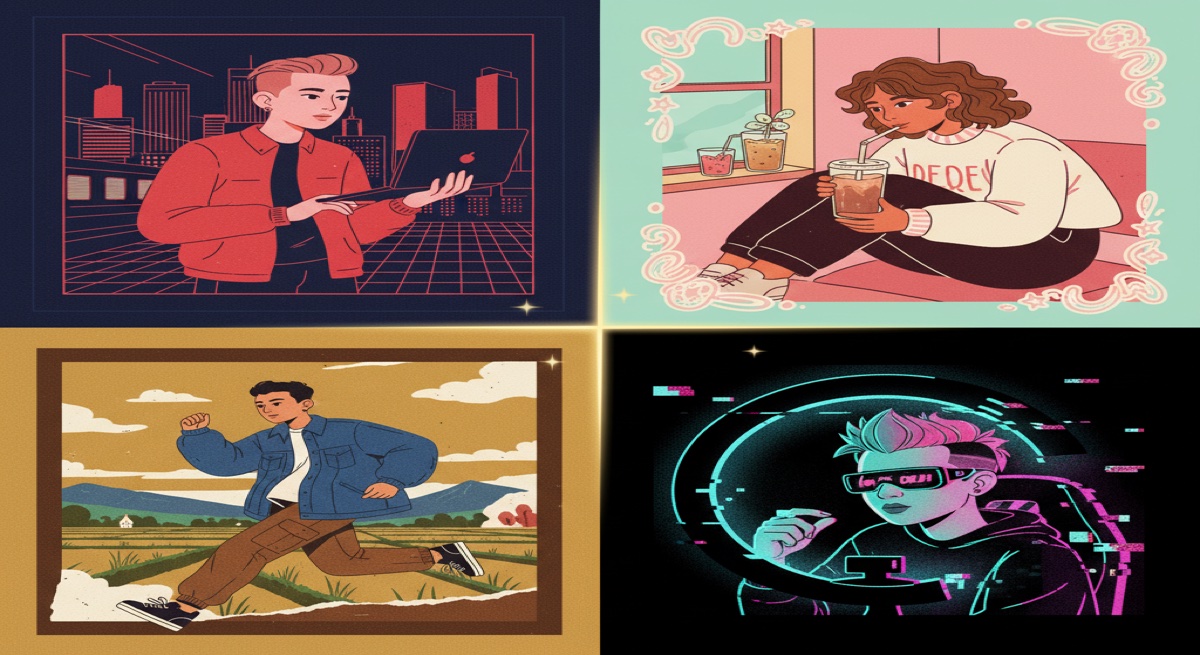
If you suspect the issue is decision style, take the personality-16 quiz before your next prompt. It can show whether you lean logic, harmony, novelty, structure, or avoidance.
The productivity cosplayer is sneakier. They use AI to make plans, Notion tables, study systems, content calendars, and perfect routines, then feel productive without touching the messy task. I say this with love. The template is not the work.
The read that actually helps
The healthy sparring partner uses AI like a whiteboard. Draft, critique, alternative angle, edge cases, summary. Then they decide. The key is that the final judgment still has a human owner. You can feel the difference.
A simple checkpoint helps: try it without AI for seven minutes first. Not forever. Seven minutes. Write the ugly text, outline, decision, or question in your own words before asking the machine to help. Build the muscle.
For the reassurance looper, the checkpoint is one prompt maximum. Ask once, then send or wait. If you keep re-prompting until anxiety disappears, the tool is feeding the loop. Anxiety is greedy.
For the blank-page avoider, start with a bad human sentence. “I am writing this because…” works. So does “The thing I actually mean is…” Your first line can be ugly. Ugly is proof you arrived.
For the conflict drafter, write the emotional truth yourself before polishing tone. “I felt ignored and I need a real answer.” Then ask AI to make it less sharp if needed. Do not let the tool remove the need.
What to do with it
For the productivity cosplayer, ban planning prompts until you have done ten minutes of the task. Ten minutes of reading, cleaning, coding, studying, applying, calling, or drafting. Then improve the system. Order matters.
For the healthy sparring partner, keep going. The point is not to shame useful tool use. AI can help disabled users, multilingual workers, anxious communicators, students, founders, and tired people. Tools are fine. Abdication is the issue.
The social-iq quiz fits because AI changes social risk. It can make you sound smoother than you feel, which is useful until people expect that polished version in real time. Your offline voice still needs practice.
Privacy deserves a light mention, especially in EU translations, but this article should not turn legal. The everyday question is simpler: would you be comfortable if this prompt were read back to you in a meeting? If not, pause.
The part worth keeping
In AR, HI, ID, and VN contexts, AI adoption can be tied to work status and ambition, so do not shame people for using tools. The issue is not “real people never use AI.” The issue is “do you still hear yourself?”
I still use AI. I also now make myself draft the tiny human version first, even if it is clumsy. Especially if it is clumsy. That is where my actual opinion usually hides.
The ChatGPT dependency test is not whether you can quit cold turkey. It is whether you can make one small decision, write one honest sentence, or tolerate one blank page before asking the machine to hold your hand.
There is a body cue too. If you feel relief before reading the answer, you may be outsourcing anxiety more than work. If you feel curious and still in charge, you are probably using the tool more cleanly. The body keeps receipts.
A lot of people slide into dependency during busy seasons, not because they are weak but because the tool is always patient. It does not sigh, judge, interrupt, or ask why you are still stuck on the same email. That patience can become a crutch.
The fix is not moral purity. Nobody gets a prize for writing every calendar invite from scratch. The fix is choosing which muscles you want to keep: judgment, taste, conflict, memory, starting, finishing, and hearing your own yes or no.
Try a three-label system for one week: assist, replace, avoid. Assist means the tool helped you do your thinking. Replace means it did the thinking. Avoid means you used it to dodge a feeling. Labels beat shame.
For students, the danger is not only plagiarism. It is losing the slow frustration where understanding forms. If AI removes every hard minute, it may also remove the minute where the idea finally becomes yours. That minute matters.
For workers, the danger is sounding competent while feeling less capable. Polished drafts can hide skill gaps from managers, clients, and yourself. Use AI to learn the move, not only to cover the gap. Future you needs the skill.
For relationships, the danger is tone laundering. The message becomes smoother but less accountable. If you would not be able to say a version of it out loud, do not send the polished version as if it is yours. People can feel the mismatch.
A healthy AI habit leaves you more able afterward, not less. More precise, more confident, more aware of your own thought. If every session ends with you smaller and the tool bigger, that is the dependency signal.
Another sign is when you ask AI for permission to want what you want. “Is it reasonable to decline?” “Am I allowed to be upset?” A tool can help frame a boundary, but it should not become the authority on your feelings.
Decision fatigue makes dependency more likely. After a day of work tabs, family texts, bills, and news, even choosing dinner can feel like a committee meeting. Be kind about the cause while still rebuilding the habit.
Try keeping one AI-free category for a week: personal texts, journaling, dating replies, school brainstorming, or tiny decisions under ten dollars. One category is enough to make self-trust visible again.
The goal is not to become untouched by technology. That fantasy is boring and fake. The goal is to use a powerful tool without letting it become the narrator of your inner life. Your gut still gets a vote.
One useful boundary is no AI for feelings until you have named the feeling yourself. Mad, scared, lonely, jealous, bored, ashamed, relieved. The label can be crude. It just has to be yours first.
Another boundary is no AI for final decisions. Let it list options, risks, and scripts, then close the tab before choosing. The silence after the tool is where self-trust gets reps. Stay there a minute.
If you relapse into over-prompting, do not turn that into another shame project. Ask what you were trying not to feel. Usually the answer is uncertainty. Humans hate uncertainty. Tools make it look removable.
The healthy endpoint is not “I never ask for help.” It is “I can ask for help without disappearing.” That is the whole test. If your voice remains in the room, the tool is probably serving you.
If you use AI for creative work, keep a folder of unassisted scraps. Bad titles, rough lines, weird ideas, half-formed opinions. That folder proves you still generate raw material. Raw material is where taste begins.
If you use AI for emotional work, keep one trusted human in the loop for serious issues. A model can draft language, but it cannot know the full relational history or hold you afterward. Some things need a person.
For a quick self-test, ask: would I be embarrassed if someone saw how many versions of this prompt I ran? Embarrassment is not proof of a problem, but it points toward the place where the habit has become secretive. Secrets deserve attention.