Bird Theory, Orange Peel Theory, and What Gottman Was Right About
Published 2026-05-21

✨ Quiz
Your Attachment Style In Relationships
The video that restarted it was 17 seconds long. A woman points out a cardinal on the windowsill. Her boyfriend, off-screen, says "huh, where." She turns the phone. He looks. He smiles. That's the whole video. Caption: "passed the bird test." 9.3M views in a weekend. (Nice News on the Bird Theory test)
The Orange Peel Theory had already softened the audience for it. #orangepeeltheory has crossed 146M combined views across TikTok — the test where you ask your partner to peel an orange for you, and how they respond is supposedly the entire health of your relationship in 30 seconds. (The Knot on Orange Peel Theory) The Bird Theory is the same logic, simpler stakes: do they look when you ask them to look.
These aren't new. They're a 1990s academic finding (John Gottman, University of Washington) wearing TikTok clothes. And the science underneath is more interesting than the tests themselves.
What Gottman actually found
John Gottman watched couples on video in his "Love Lab" for over two decades. The thing he kept finding wasn't about big fights — it was about what he called bids for connection. A bid is any tiny attempt to engage: "look at that bird," "the coffee's actually good today," a sigh while reading the news, a hand brushing your arm.
The thing that predicted whether a couple stayed together wasn't whether they fought. It was whether they noticed each other's bids — and either turned toward them, turned away, or turned against them.
Couples who lasted turned toward each other's bids roughly 86% of the time. Couples who divorced inside 6 years turned toward bids only 33% of the time. The 53-point gap was, in Gottman's data, the cleanest single predictor of long-term outcomes he had. (For markets where divorce stats are culturally loaded, the same data also predicts long-term reported relationship satisfaction — the divorce framing is one of many ways to read it.)
The Bird Theory and the Orange Peel Theory are, structurally, ways of staging a bid and watching what happens. They've just been compressed into a 17-second video format.
How each test actually works (and what it's actually measuring)
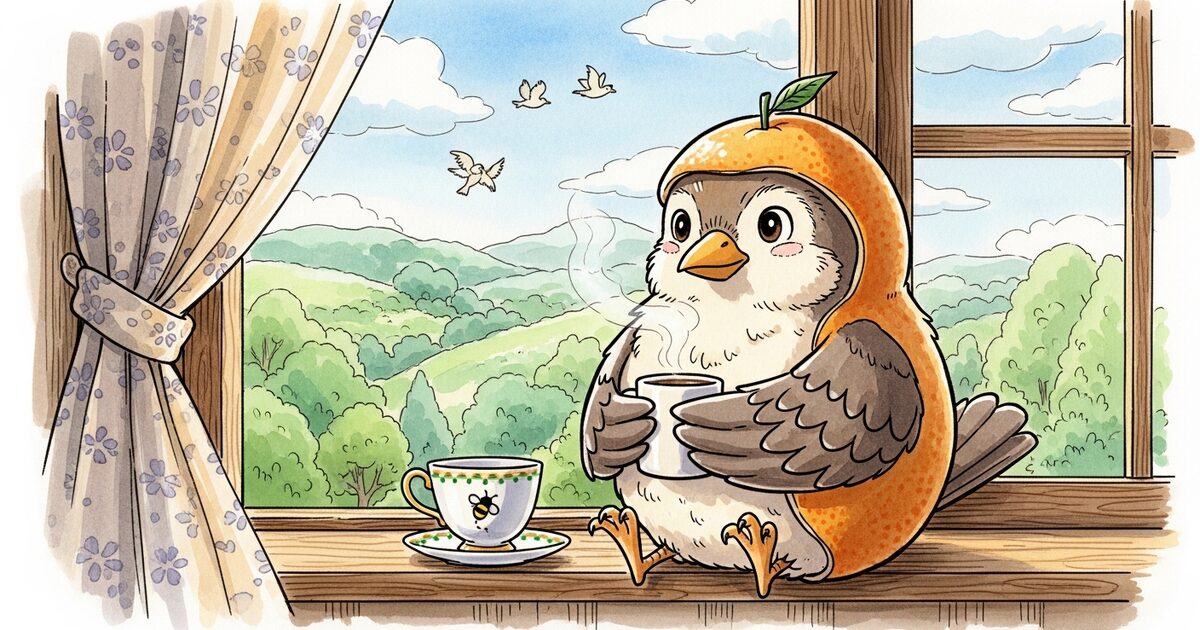
Bird Theory. You make a small observation. "Look at that bird." Your partner either looks, asks a follow-up, ignores you, or makes you feel stupid for noticing. What's being measured: whether your partner is willing to be momentarily curious about something you find interesting, with zero stakes.
The pass: they look, even briefly. They don't have to be enchanted by birds. They just have to acknowledge that you noticing something is itself worth a second of attention.
Orange Peel Theory. You ask your partner to peel an orange for you, or to do some other small, low-stakes act of care. What's being measured: whether they perform care without immediately asking "why can't you do it yourself" or treating the ask as an inconvenience.
The pass: they do it, or they ask "do you want me to" in a way that reads as warm not put-upon. They're allowed to not feel like peeling the orange. The question is what their face does when you ask.
The parking test (the quieter one going around). You're driving together. They notice the parking spot is tight and either silently make space, or visibly white-knuckle the whole maneuver while you watch. What's being measured: whether your partner can absorb small stress without making it your problem.
The pass: they handle it. The failure mode isn't "bad parking" — it's narrating the bad parking out loud, dragging you into it, then snapping at you for being in the passenger seat.
What the tests get right
They isolate the right variable. Gottman's whole point was that big tests don't predict relationships — micro-responses do. The orange peel and the bird are perfect because they have no instrumental value. There's no good logical reason to look at the bird. That's why looking is the whole signal.
They give people a vocabulary. "I asked him to peel an orange and he sighed" is a more legible complaint than "I feel unseen." Naming the dynamic makes it actionable.
They make the invisible visible. Bids for connection are tiny and constant. Most couples don't realize they're already failing each other 60-70 times a day. The test forces one moment into focus so you can actually look at it.
What the tests get catastrophically wrong
Here's where it gets uncomfortable: the act of staging the test is itself a red flag in the relationship. Gottman's data is about spontaneous bids in real life. The orange peel test is an engineered bid, designed to be filmed.
If you are setting up a 17-second TikTok to prove your partner doesn't love you, the relationship has already telegraphed that to you. The test is downstream of a feeling you already had. You're not gathering data — you're collecting evidence.
A few more failure modes:
The N=1 problem. One failed bird test isn't a relationship signal. It's a Tuesday where your partner was tired. The 86%/33% split is across thousands of bids. Treating one test as definitive is exactly the cognitive distortion the test is supposed to be diagnosing in your partner.
The gotcha frame. When the partner figures out it's a test (and post-2024, basically every partner knows the orange peel meme), the test stops measuring care and starts measuring whether they're willing to perform for the camera. Those are different things.
The selection bias of viral content. The 9.3M-view videos are the dramatic fails and the perfect passes. The 80% of relationships where the partner says "where, what bird, oh cute" and the moment passes uneventfully — those don't get uploaded. The algorithm is selecting for breakup content.
The reverse-test problem. Some of the most-shared "passed the test" videos are the ones where the partner clearly knew it was a test and performed exactly the response the algorithm wanted. That's not love. That's content collaboration.
The actual move (which is annoyingly simple)
Don't stage tests. Just notice what your partner does when you say a thing. Once. For one week. Without telling them you're noticing.
How many times did you say something small ("the coffee's really good today" / "look at that dog" / "I had a weird dream") and they turned toward you? How many times did they keep scrolling, or change the subject to themselves, or correct you?
If the ratio is roughly two-thirds toward you, you have a real relationship that needs no test. If it's flipped, the orange peel won't fix it — but you now know what you're actually feeling, which is a different conversation than "did he pass."
The other move: instead of testing them, send them the test. Watch how they laugh, or watch how they get defensive. The reaction to being told about the test is, weirdly, more diagnostic than the test itself.
The honest CTA
Before you stage anything, take the attachment style quiz. A lot of the failed orange peel tests aren't relationship problems — they're an anxious partner asking for impossible reassurance from an avoidant one, both of them doing their best, neither of them realizing the bid pattern is the issue. Naming your own attachment style before you blame his peel technique is the move Gottman would actually endorse. (PureWow on the orange peel theory trend)
Send the result to your partner. See if they laugh.